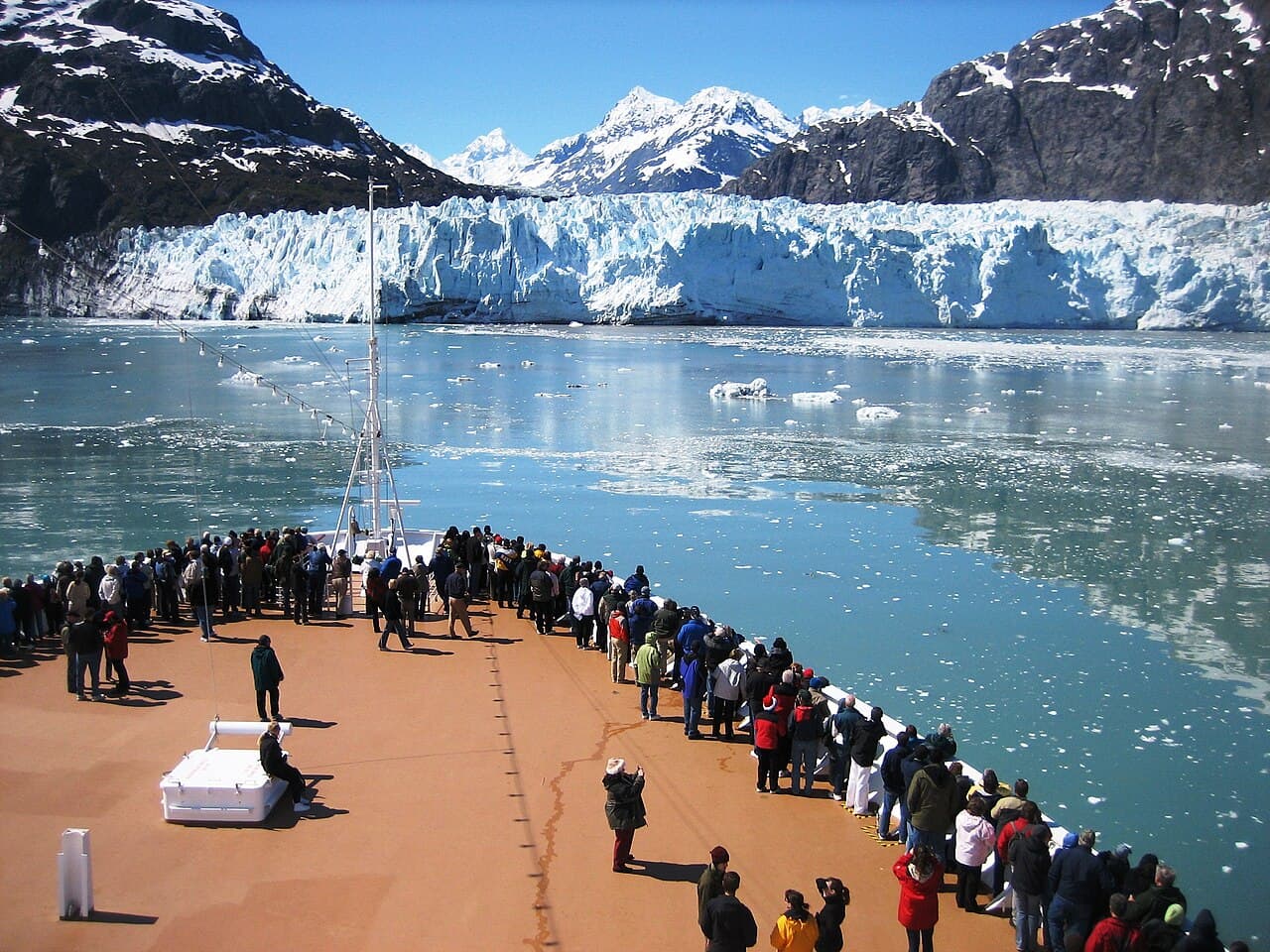
Short answer: mid-June through early August is the safest bet, and late May or early September is the best value if you'll trade some weather for fewer people. The season runs May to September and that's the whole of it — there's no cruising in April or October.
The month you pick changes the trip more than the ship does. Here's what each one is actually like.
May
Cool, dry, and quiet. Drier than July, which surprises people.
Snow is still on the mountains and it makes every photograph better. The ports feel like towns rather than attractions — shops are opening for the season, staff still know each other's names, and you're not queuing for anything.
Bears are just out and hungry, so bear viewing can be very good. Whale numbers are still building.
Highs run 50–60°F. Early May can be genuinely cold. Prices are the lowest of the season, and if you don't have children in school, this is where the value is.
June
The best all-round month, and priced accordingly.
Daylight peaks around the solstice — nineteen hours of it, and a long slow dusk after. You'll find yourself outside at ten at night wondering where the day went. Wildflowers are out. Wildlife is fully active.
Highs 60–65°F, and the weather is about as settled as Alaska gets. The second half of June is what I book most often when someone says “just tell me when to go.”
July
Warmest month, and the busiest.
Highs 65–70°F, occasionally more. Salmon runs peak, which means bears at the rivers doing the thing you've seen photographs of. Every excursion runs. Everything is open.
It is also the wettest of the summer months in the southeast, and the ports are full — several ships in a small town at once. If you dislike crowds, this is the trade you're making.
Mid-July is peak pricing. Book early or take a different month.
August
Warm at the start, cooler and wetter by the end. Whale watching is at its best — humpbacks are feeding hard before they go south, and August sightings are the most reliable of the season.
Late August starts to feel like autumn: the tundra turns, the crowds thin, prices soften. If northern lights are on your list, the last week of August is the earliest they realistically appear.
September
The gamble, and sometimes the best week of anyone's year.
Fewer ships, lower prices, fall colour, and a real chance at the aurora. It's also colder and wetter, seas can be rougher, and some excursions have stopped running for the season.
The first two weeks are worth it. After that, things start closing.
The two weeks most people should skip
The last week of June and the first week of July. School's out, the Fourth is in there, and every family in the country has the same idea. Same ships, same ports, same weather as the weeks either side — noticeably more people and noticeably higher prices.
Shift by seven days in either direction and you get a better trip for less money. This is the single easiest change I make to people's plans.
What most people get wrong
They pick a month for the temperature.
Alaska in summer is 55–70°F and mildly damp no matter which month you choose. The temperature difference between May and July is smaller than the difference between a sunny afternoon and a cloudy one on the same day.
What actually varies is daylight, wildlife, crowds, and price. Pick for those. Bring layers regardless — see the packing list.
If you're travelling with grandparents or young children
June, and I'd say it firmly.
The weather is most predictable, the daylight is generous enough that a slow morning doesn't cost you the day, and everything is open without July's crush. A group that moves at three different speeds needs margin, and June has the most of it.
Tell me who's coming and I'll pick the week
Plan a Trip →